Reading as Flirting
Dating apps ask for height. I want your favourite novel and the last poem that broke you. That’s the real compatibility test.

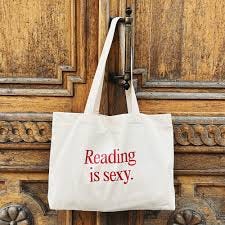
Once upon a time — specifically, during my A-levels — the boys I fancied were all Kerouac and Salinger. They had battered paperbacks with covers falling off, handwritten bus timetables tucked between the pages, and that glazed look of people who think they’ve discovered something no one else has read since 1959. I found it intoxicating. Not the prose, which was fine if you like unwashed men describing roads, but the way their voices dropped when they read aloud. They believed in books as seduction, and I was seventeen and more than willing to be seduced.
University was harder. On my humanities course, the boys either saw women purely as an audience or were so piously political that you couldn’t share a joke without being accused of bourgeois tendencies. I didn’t have the patience. So I dated a man who played in a band and was a BMX champion. He was so beautiful it was almost a public service. He didn’t speak much, which was perfect: I could project entire novels into the silence.
After that, it got complicated. I’d already met the type who liked me - the arty men who would try to museify me, turning my wit into a prop for their self-mythology. So I veered towards tech and business men. They were refreshing at first: clean shirts, actual plans, and a fondness for dinner reservations. But if they read at all, it was Schopenhauer or Nietzsche, and they acted as though they’d single-handedly discovered philosophy.
The fun part was always the moment they finally saw my shelves. The long, slow realisation that when I said I read anything and everything, I meant anything and everything. That next to the Woolf and the Baldwin were Stephen King, Marian Keyes, a 1969 Mrs Beeton’s Book of Household Management, bell hooks, an anthology of dirty limericks, and yes, I had already read Thus Spake Zarathustra and The World as Will and Representation. The horror. The awe. The slight panic when they realised they were not, in fact, my primary cultural influence.
Book taste, for me, has always been a kind of courtship dance: part attraction, part reconnaissance. I have fallen for people entirely because of what was on their shelves. I once dated a man solely because he quoted Rilke at a party. He turned out to be unbearable, but so was Rilke, so it felt thematically consistent.
Sometimes it’s not even about romance. It’s about the intimacy of recommending a book and waiting for someone to return it, knowing they’ve had your thoughts in their hands. Or the little shiver when you spot a book you love on a stranger’s desk. It’s the quiet flirtation of saying, Here. This moved me. Let’s see what it does to you.
I’ve learned not to underestimate the erotic potential of lending someone Mrs Dalloway. Or the warning sign of a man who says he “doesn’t read fiction” because “real life is interesting enough.” (It isn’t. He won’t be, either.)
And here’s the sad fact: so many people, both men and women, never grasp that as we get older, the real allure is less about what someone reads and more about why. What are they looking for? How do they approach it? Are they curious? Are they open to surprise and wonder? Is their mind flexible enough to be changed? Or are they reading only to be affirmed, to live in an echo chamber, to turn every conversation into their personal broadcast rather than a two-way radio?
Anthropologists would tell you this is an ancient instinct. We have always read each other’s “cultural cues” to decide who is safe, who is desirable, who might share our vision of the world. In the Pleistocene it might have been tool-making style or beadwork patterns; now it’s book spines. Bourdieu’s concept of “cultural capital” sits right here - books and literary taste as social currency, signalling education, values, and alignment with a particular tribe. Mary Douglas’s theory of purity and danger even sneaks in: some readers treat their shelves as sanctified space, admitting only the “right” authors, while others delight in a little contamination – I am all for contamination.
Clifford Geertz might see the act of scanning someone’s bookshelves as a form of “thick description”: reading not just the titles but the arrangement, the wear, the inscriptions, the bookmarks still tucked inside. They are artefacts of the self.
Literature itself is full of this coded seduction. In Possession by A. S. Byatt, the love affair between two scholars begins not with a kiss but with the discovery of a hidden letter in an old book - intellectual and erotic intrigue entangled. In The Shadow of the Wind by Carlos Ruiz Zafón, a shared love for a forgotten novel sparks both romance and danger. In Norwegian Wood, Haruki Murakami lets the act of lending and discussing books stand in for the deeper, sometimes impossible intimacies between his characters.
And then there is the sheer, unapologetic enthusiasm for bookish girls in Mark Grist’s spoken-word poem I Want a Girl Who Reads:
“I want a girl who reads
Who feeds her addiction for fiction
With unusual poems and plays
That she hunts out in crooked bookshops for days and days and days
She’ll sit addicted at breakfast, soaking up the back of the cornflakes box
And the information she gets from what she reads makes her a total fox
Cos she’s interesting & unique
& her theories make me go weak at the knees”
Books are my love language. Again, not in the basic swapping-fluids sense, but in the acts of love and devotion - finding words and ideas, offering them like gifts, touching the people I care about in ways that go beyond flowers or phone calls. Handing someone a poem that says the thing you cannot quite say aloud. Slipping a battered paperback into a bag before they travel. Pressing a novel into their hands with the quiet urgency of you need this.
Of course, it is depressing and frequently frustrating when they won’t pick up the bloody book, or read the blasted poem, or engage with the page that has you fizzing with excitement. But I suppose that is a joy as well - the words won’t fade on the page. They will still be there, waiting, for when the moment is right. And in the meantime, somebody else who needs them might stumble across them.
There’s a kind of faith in that. In knowing that the act of giving the book or the poem is itself enough, even if the recipient never reads it. Because it still says: I thought of you. I saw this and knew you should have it. That’s the part that’s love. The rest - the actual reading - is out of your hands.
And perhaps that’s why, after all the flirtations and false starts, I still fall for people through the books they keep, the ones they lend, the ones they remember. Not because I expect them to be my mirror, but because I want them to be a window.
And crucially - flirting isn’t about hunting down a lover, a mate, or even a follower to hang on your every word. It’s not a transaction, it’s a dance. A flicker of recognition, a spark, a passing current of possibility that doesn’t have to go anywhere except that moment. It’s the lift of an eyebrow across a room, the jolt of seeing your favourite poet on someone else’s table. A frisson, not a contract. The point is not possession but play - that light-footed shuffle between attention and imagination that makes you feel briefly, gloriously alive.
Because reading, like flirting, is an act of attention. It’s saying: I see you. I want to know what you think. And maybe, just maybe, I want you to think of me when you turn the next page.
Just a quiet . . . yes ~ because this says everything that means anything already…. glorious! 🖤
Yes to all this. Thank you for writing it, and for reading everything that led to it. (Seamus Heaney’s letters to fellow writers in the ‘70s and the first few pages of a biography of Walt Whitman – where I learned that Walt refused to communicate anything about his work to his family, for they would never understand – are the latest things to have stopped me and made me think.)